
This article was written before AI-generated content became mainstream — when most people were still treating it as a shortcut with no downsides. We've left it exactly as originally published. The core arguments have held up. Use the fact-check buttons below to verify that for yourself.
Everybody is pushing AI, but does Google actually penalise AI content? The answer is still both yes and no. Google's official guidance is that content is judged by quality, not by how it's created — meaning AI in itself isn't a penalty trigger. However, real-world results continue to show that most AI-generated content underperforms human-written alternatives. In 2024, Google even expanded its spam policies to cover "scaled AI content abuse," reinforcing that thin, purely machine-written pages are treated as spam.
Meanwhile, nearly every major website platform has doubled down on selling AI writing tools. WordPress builders, SEO plugins, and SaaS platforms now include "Generate with AI" buttons — Elementor, Rank Math, Wix, and even SurferSEO all push AI-generated text as a premium upsell. The problem is that just because the tools promote it doesn't mean it's good for your SEO. Blindly publishing AI content often does more harm than good. These features are designed to make money for the platforms, not to protect your website's long-term visibility.
Use the fact-check buttons at the bottom of this article for an independent AI fact-check. The AI may not always agree with every point — that's the idea.
Writing Safe AI Content: A Guide to Avoid Spam and Ensure Accuracy
We need to remember that AI content isn't just a technology shift — it's a business. Many companies are making money by pushing AI tools, whether or not they actually serve your website's long-term interests. Against that backdrop, it's useful to look at independent research.
Human Content Outranks AI Content
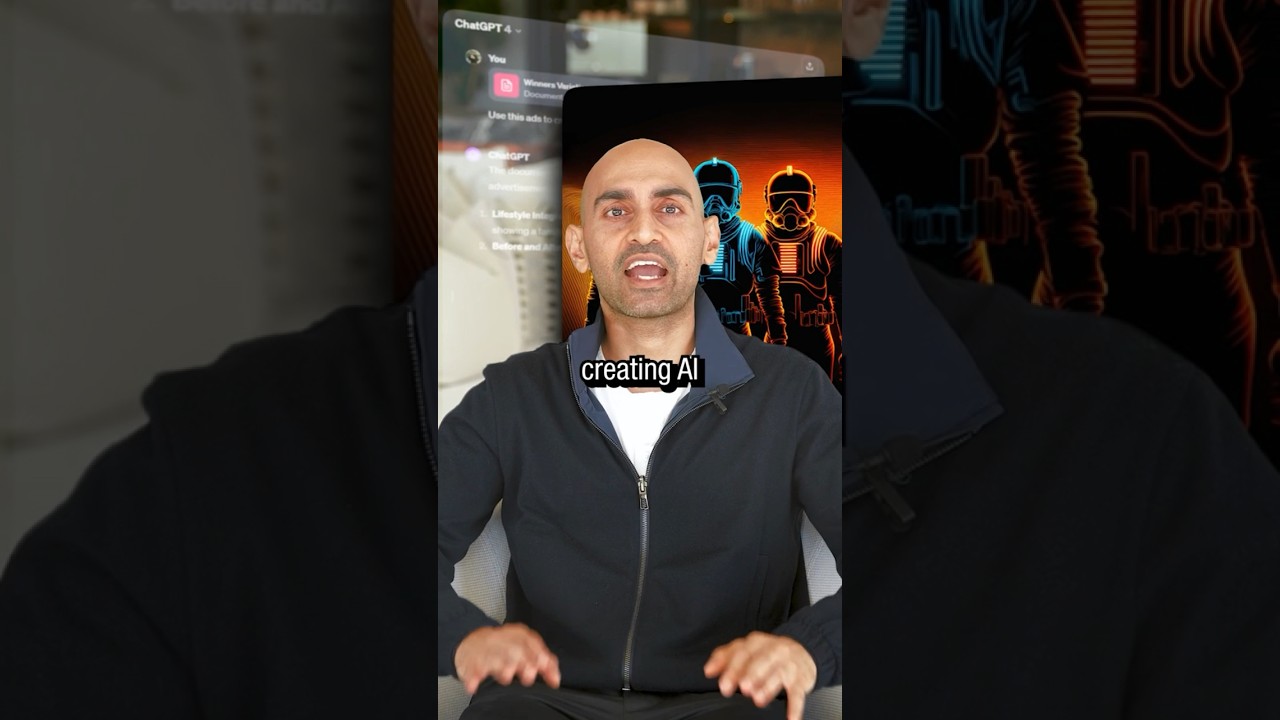
One of the most widely cited studies came from Neil Patel, founder of Ubersuggest and one of the most recognised SEO marketers in the world. In early 2024, Patel's team ran a large-scale experiment across 68 websites, publishing 744 articles — half written by humans and half generated by AI. Both groups followed the same keyword research process, used comparable keyword difficulty, and produced content of similar length to ensure a fair test.
Patel's reputation in the SEO industry, combined with the size and structure of the test, makes it one of the clearest early indicators that Google and users alike place more value on human-authored content. AI may scale content quickly, but it rarely matches the performance of content built on expertise, originality, and first-hand insight.
The results: traffic for the AI-generated content fluctuated from month to month while the human content had steady increases over the 5-month period. By month 5, the human-generated content had 5.44× more traffic than the AI-generated content on a monthly basis.
We should note that the study has faced scrutiny in the SEO community. But we need to weigh up the bias and external factors at play. A lot of the big players are pushing AI-generated content tools and have a financial stake in the game. Independent research from other sources broadly supports the finding that high-quality human-generated SEO content outperforms AI-generated content.
Study Source — Neil Patel / Ubersuggest →
How AI Works — Are You Wasting Your Time?

We need to keep in mind how AI content generation actually works. It isn't producing groundbreaking ideas or original research — it's reassembling information that already exists. In many ways, it's a more advanced modern version of the old SEO "article spinners." AI does this at a far more advanced scale, drawing from enormous training datasets that include books, websites, academic papers, and social media, then restructuring that knowledge into new outputs.
The difference in 2024 is that AI-generated text can sound fluent, polished, and even insightful — but at its core, it's still a remix of existing material. That's why Google's guidance now emphasises "Experience, Expertise, Authoritativeness, and Trustworthiness (E-E-A-T)" when evaluating whether content provides real value. Search and AI-driven platforms like Perplexity, ChatGPT, and Google's AI Overviews increasingly reward original analysis, first-hand perspectives, and unique data — things machines can't truly generate on their own.
Readers don't want to consume endless re-spins of what's already online. They're looking for fresh insights, real-world experience, and authenticity. In an AI-saturated web, human perspective has become more valuable than ever.
How I Use AI for Creating Blogs & Articles
I use AI to blast out ideas. For example, I might ask the AI to give me 20 blog ideas in a particular niche. That alone is a massive time saver. Instead of sitting down and having to write out ideas, ChatGPT can do it in an instant. Another good trick if you get writer's block: submit the current article contents to ChatGPT and ask it to finish the article and give you 5 different variations. This will open up a host of ideas on how you can progress and finish the blog. I won't use the content it provided but it can get the flow moving again in the direction I want — but with my own original content.
Conclusion: Shortcuts Lead to Long Delays
AI is a useful tool but you have to use it right. Don't over-depend on it. Make it work for you, not against you. AI content creation can actually help you skyrocket your own content — but not in the way you might think. With a large percentage of marketers and website owners now using AI content, it gives you the opportunity to outwork your competitors. Spend the time writing your own engaging, SEO-rich content and you'll get the rewards.
But to finish off, we need to keep in mind that this is a new and rapidly evolving technology, so the goal posts may shift quickly. What's relevant and working today may not work tomorrow.
Sources
Fact-Check This Article with AI
Claude will display a security notice for external prompts — this is standard behaviour, just click send. The AI may not always agree with every point in this article. That's the idea.